


There’s an inherent excitement in moving into a new space. Even people who aren’t really into interior design can spend hours on Pinterest and Instagram, creating folders full of stylish interior pics, choosing furniture, testing paint swatches, etc. But the truth is that the fun part is rarely ever enough to create a truly functional interior design - and if you ignore the other, non-fun parts, you might end up in a house that doesn’t really feel like home and may even become a burden long-term.
To have at least some guarantee that every part of it comes more or less together, you need to begin with in-depth research. Before you choose finishes, you need to know what your non-negotiables are for a comfortable long-term residence, what functions the space needs to handle (and what can be adjusted or skipped altogether), and what kind of atmosphere you need to come back to every day to be able to truly unwind. Oklahoma State University’s design guide explains that balance, proportion, rhythm, and unity are key characteristics to creating comfortable interior design. Put more simply, rooms feel good if the fundamentals are sorted out first.
That is especially true when it comes to newly built Georgian houses and apartments that you need to design from the ground up. It can be a bit daunting, starting from zero, but it also gives buyers a real opportunity to shape the apartment properly from the start, instead of trying to correct avoidable problems later. Archi goes a step further with its premium projects and offers potential buyers customizable floor plans, so that they have even more freedom to design the space that’ll closely align with their necessities and preferences.
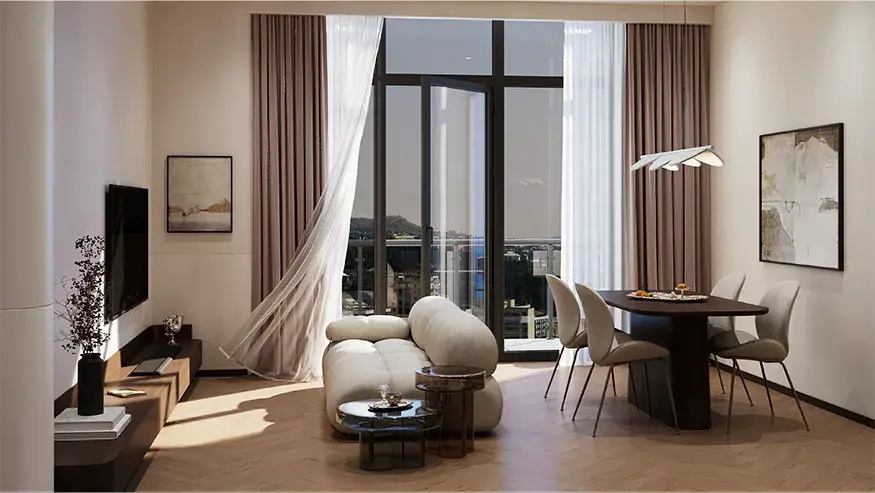
Step 1: What Do You Want it to Look Like? Find The Right Direction for Home Interior Design
Architectural Digest’s August 2025 guide to interior styles made a good point when talking about how to design your own home interior: it is much easier to recognize your taste once you can place it within a few broad style frames. A practical way to do that is to save a batch of room design photos you genuinely like, then place them side by side and review them together instead of one by one. You’re bound to notice at least a few repeating patterns showing up. Maybe you keep coming back to warm neutrals, light wood, darker accents, softer fabrics, or cleaner contemporary lines.
A good beginner trick is to try to describe your future home in three words. Calm, warm, functional works for many people. Bright, minimal, soft works for others. Think of them as a sort of initial filter for Interior design principles for beginners. They should help you align your base non-negotiables with further practical decisions. Once you have at least a vague idea of what your home should look like, there's a lower chance that you’ll be distracted by random pretty (but misaligned) things, and you will be able to use Oklahoma State University’s recommendation on unity and proportion.
Architectural Digest highlights modern, industrial, Scandinavian, minimalist, and Japandi as some of the most popular interior directions today. Minimalism is usually the cleanest and quietest. Scandinavian interiors tend to feel lighter and softer. Japandi focuses on functionality and tends to use darker colors. Modern apartment spaces are limited, so they frequently necessitate a sharper and more controlled approach. Modern apartments in Georgia tend to lean towards a sparser, minimalistic interior design simply out of necessity - it’s easier to maximize the space by simply not cluttering it.
Step 2: Before Dreaming Up Home Interior Design Ideas, Get the Layout Right
Before you choose tile, paint, or furniture, measure the apartment properly. Check wall lengths, window positions, ceiling height, sockets, plumbing points, and door swings. It is not glamorous, but it’s the only way to avoid expensive mistakes that frequently balloon the budget. In AARP’s overview of universal design, Richard Duncan of the RL Mace Universal Design Institute argues that homes work better when useful features are built into the design from the beginning rather than added as later fixes. The same logic applies here: if the plan works, almost everything else gets easier.
So start by coming up with white frame apartment design ideas, not by ideas for a move-in-ready apartment that just needs a little personal touch. A standard White Frame or Premium Frame apartment is an empty canvas you need to lay the foundation in making the decisions that’ll be the hardest to fix, if you don’t get them right from the get-go: the storage space, the kitchen arrangement, the lighting points, etc. If you’re still sifting through the listings of flats in Tbilisi for sale, it would be good to add those notions to the decision-making process. Price matters, of course, but so do window placement, room shape, and whether the apartment can be sectioned in a way to serve all your needs. Archi, for example, has a leg up over the competition because some projects offer customizable floor plans, which makes it considerably easier to tailor them to your needs
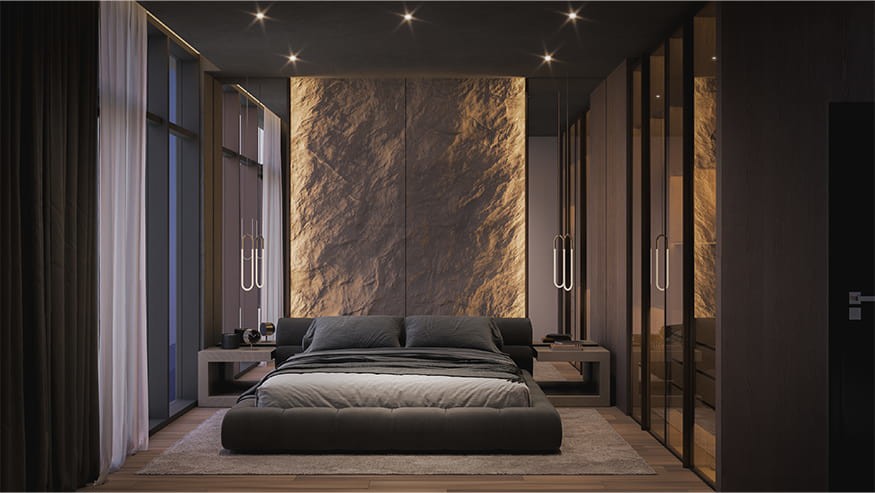
Make Apartment Interior Design Functional First: Create a Natural Flow and Furnish with “Correct” Furniture
A room can look great in photos, but that doesn’t mean you’ll feel comfortable living there. Determine your biggest needs first. In the living room, the sofa tends to be the centerpiece. it. In the bedroom, it is the bed and storage. In the kitchen, it is the prep area. How easily can you move through these spaces? In good interior design for homes, it’s function first, aesthetic second. At best, they’re closely aligned. Oklahoma State University’s design guide explains why: when proportion and rhythm are off, a room feels uncomfortable even if aesthetically pleasing.
Step 3: Now You Get to Choose Color, Light, and Materials for the Final Home Interior Design
Once the practical side, like the layout, is resolved, you can start concentrating on the details that shape how the apartment feels: color, light, and furnishing. Color affects the space and depth perception, lighting changes both mood and usability, and the materials used will determine whether the overall feel leans warm, refined, or practical.
Color: Choose the Palette that will Feel Comfortable Long-Term
Most people overcomplicate color. More often than not, the more shades you use, the harder it becomes to finish properly. A 2018 study published in Frontiers in Psychology found that color affects how bright a room feels, and it also reported a preference for white ceilings in the residential setting. A tighter palette is usually easier to live with and easier to get right. If you want modern home interior design, one main color, one supporting tone, and one accent is usually plenty.
If you want more personality, use materials, not extra colors. Wood, fabric, stone, glass, or metal can usually give a room more depth than adding a fourth wall color would. A clean white frame shell can make restraint harder, but the room with clearer lines and fewer visual distractions will serve you better long-term.
Lighting: Take Both Natural and Artificial Light into Account
A room may have a good layout and decent furniture, but will come across as cold, flat, or slightly uncomfortable because the light is wrong. Research on residential daylight published in 2021 linked better daylight access at home with improved circadian alignment, sleep, vitality, and mental health. Harvard Health also notes that blue light at night somewhat suppresses melatonin. In short: the light you need during the day is not the light you want at night.
In daylight hours, it usually makes sense to lean on the windows and keep the room as open to natural light as possible. Later in the evening, brightness isn’t as important. What matters is the room to feel settled. In most homes, the mixed approach is the way to go: softer overall light, task lighting where you actually use it, and a few warmer lamps that make the space feel cozier in the evening.
Materials: Add Character with Texture
Adding texture can stop a room from feeling flat. Wood, matte paint, woven fabric, glass, metal, and stone all add depth without making the space feel crowded. It’s often the case of true luxury apartments: they don’t just look good on the surface, the design goes deeper. It feels good to the touch. In Architectural Digest, designer Pamela Shamshiri describes layering texture by making sure each room includes a range of materials, from wood grain to woven fibers to brushed metal.
Step 4: Apartment Interior Design Tips
With each room, start with the question that matters most: what will actually happen here most days? Talking, eating, reading, and watching TV - primary functions lead to slightly different layouts.
In the bedroom, comfort should come first. Harvard’s Healthy Buildings guidance recommends room-darkening shades to block light, and Harvard Health advises minimizing light at night because evening exposure can interfere with sleep.
Kitchens are different again. The National Kitchen & Bath Association treats planning there as a technical issue as much as a visual one, with attention to clearances, activity zones, fixtures, fittings, and finishes. If a kitchen is annoying to use, no styling choice will really save it.
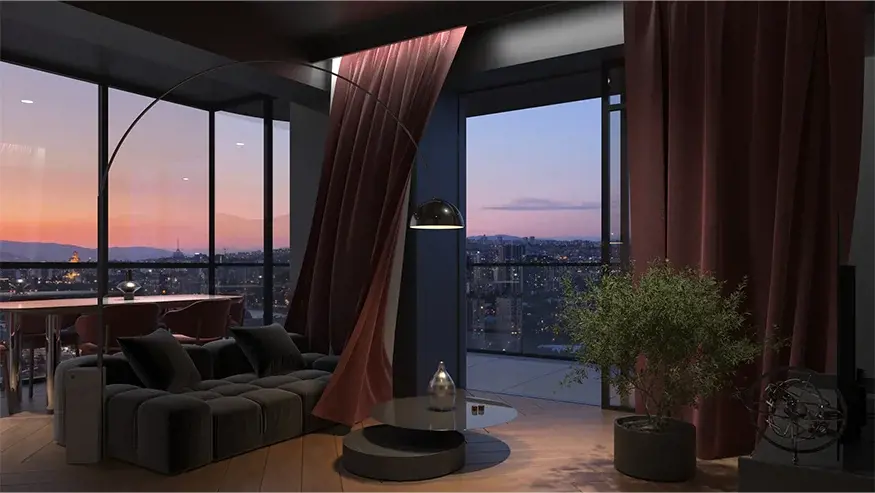
Archi Apartment Can Be the Perfect Canvas for Your Interior Design Ideas: Here’s Why
Designing a home from the ground up can be trickier because there’s only so much you can influence: build quality matters too, and the developer is responsible for that part.
In that part, you can count on Archi: the company uses elements such as YTONG blocks, Heidelberg concrete, and Low-E glass to make sure you’ve got a good frame to work with. German YTONG blocks and Low-E glass help maintain stable temperature and light penetration in the room, while reducing heating or cooling energy use - sometimes up to 40%. In a better shell, finishes and materials work better together, as well.
Archi’s projects offer customizable floor plans for White Frame and Premium Frame delivery. You can arrange for an interior plan that isn’t the default Archi offer with ease. Once you’ve finalized the purchase, you can let the Archi representatives know how you’d prefer internal partitions to be positioned. For buyers, that matters because a quality shell makes design much easier. It gives you more freedom to focus on layout, storage, style, and finish choices instead of spending energy correcting basic problems. That is what makes planning an Archi apartment interior feels easier from the beginning.
Once the basics are solved, the rest of the process becomes less stressful. You are no longer guessing from purchase to purchase; you are making decisions within a clear direction. That is really the point of a good dream house interior guide: first make the home work properly for daily life, then make it feel personal.